

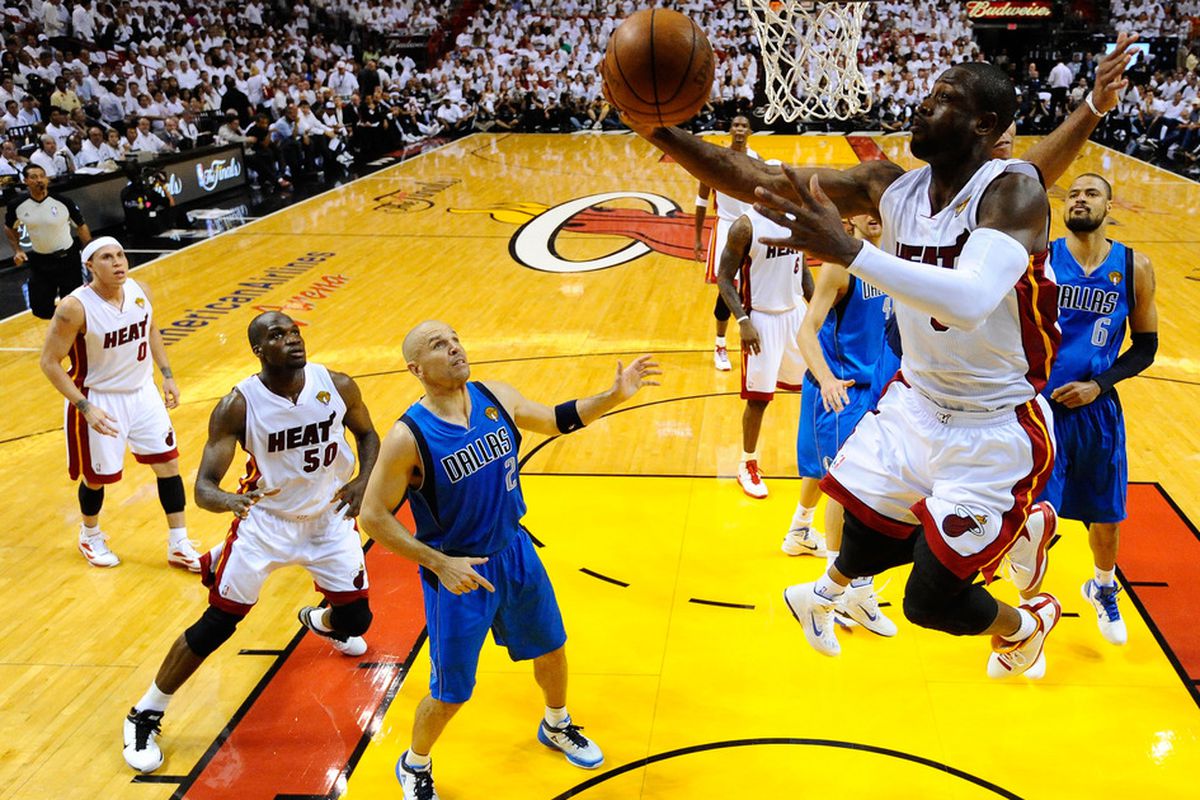
LeBron, Wade, and Bosh. Miami’s superteam. Nobody told Dirk Nowitzki he was supposed to lose.
The Dallas Mavericks won the 2011 NBA Championship on June 12, defeating the Miami Heat 4-2 in a Finals series that produced one of the sport’s most satisfying individual narratives: Dirk Nowitzki, 32 years old and playing through physical discomfort throughout, claiming the one honour his 13-year career had lacked with a performance of controlled brilliance across six games.
Nowitzki averaged 26 points per game in the Finals, but the statistics miss the texture of what he produced. The one-legged fadeaway over multiple defenders became the series’ defining image — a shot that looked wrong in every physical sense and went in with a regularity that the game had no answer for. The free-throw shooting in late-game situations, the defensive rotations, the calm under pressure: everything Nowitzki produced that fortnight was the expression of a player who had waited for this moment and arrived at it with complete readiness.
Miami’s collective performance — and LeBron’s specifically — fell short of expectation in ways that generated immediate and lasting discussion. His retreat from responsibility in late-game situations during the series was documented and analysed extensively; he later acknowledged in interviews that 2011 was a series he wished he had approached differently.
For Dallas, and for the NBA’s broader story of international players reaching the sport’s summit, Nowitzki’s championship carried meaning beyond the result. A German player, arriving in the league at 19 from Würzburg, had become the Finals MVP of the most commercially visible sports league in the world.